
COPS IN THE SKY
What are the chances Law Enforcement is on your flight?

We woke up over the weekend to the story that a United Airlines flight from Chicago to Minneapolis was potentially the target of a hijack attempt. An unknown male allegedly tried to breach the cockpit door twice, and the pilots squawked 7700, the universal signal to Air Traffic Control a plane was under threat. Fortunately we also heard that there were five Law Enforcement Officers (LEOs), at least two of them FBI Agents aboard who restrained him, and the plane made an emergency detour to Madison where it was met by additional LEOs.
Social media posts were filled with stories about Federal Air Marshals stopping the attack and other false stories about how law enforcement in the sky works. So, without giving away any secrets, (I’m leaving out some details,) here is a quick primer on how cops in the skies actually works.
First, the end of the story. The feared hijacker turned out to be a 76 year old Russian speaking man who was apparently suffering a mental health crisis. So much so that when the FBI met the plane and briefed the Department of Justice on the facts, the decision was made to forgo prosecution. To dispel another fake notion in the story, United Airlines did not decline to prosecute the subject to burnish their image as some reports claimed. Crimes aboard an aircraft are serious felonies, and DOJ, not the airline has the final say so on prosecution.
The Federal Air Marshal Program (FAMs, often called Sky Marshals back in the day,) goes back to the early 1960s when hijacking became a thing. Mostly communist dissidents wanting to go to Cuba (for some reason,) and Middle Eastern terrorists. As screening got better, the program dwindled and there were less than 50 FAMs on 9/11.
That changed everything and the program, under the FAA ramped up to nearly 4000 Air Marshals. Today, the number is a closely held secret, but it’s estimated to be around 2500 - 3000 total. Including supervisors, headquarters personnel, and trainers. Throw in shift work, vacation, etc and it’s likely less than 1000 - 1500 on duty at any one time. Probably less. But there are approximately 30,000 domestic (90%) and international flights a day in the U.S., so you can do the math on the odds there is a FAM on any particular flight.
Actually, you probably can’t guess which flights. TSA uses a complex system of locations, current threats, available personnel at a departure city, etc. to decide which planes get coverage. I have no inside knowledge, but I’d guess flights into big cities, like New York, LA, Chicago, and especially Washington, D.C. have more FAMs, than say, Milwaukee. I’m guessing some international flights are overrepresented as well, depending again on threats.
So, like in the case of last week’s flight, what are the chances non FAM LEOs are on your flight? Well, there are about 150,000 federal LEOs. Some of these are federal uniformed police officers who don’t fly regularly for work, and are highly likely not authorized to fly armed. About 100,000 are federal agents, many or most of whom are so authorized. Mostly FBI and DHS agents.
Many or most of these federal agents fly armed all the time, including off duty and when they are on vacation. An exception would be flying internationally, on or off duty, because once they get there, the laws are all over the place on carrying firearms. Mostly they cannot carry a weapon.
The exception would be U.S. Secret Service and State Department Diplomatic Security agents who travel internationally on protection details. Not giving away any secrets here, but these trips are usually planned well in advance so they can negotiate with host countries on weapons, and they have ways of otherwise getting weapons in country.
As an FBI agent, I traveled to areas of the world where we were issued a firearm once we got there, (and the host country law enforcement knew it.)
Of those 100,000 feds, many of them travel and could very well be aboard your aircraft, but the odds are still low.
There are also approximately 700,000 state and local police officers in the country. Post 9/11, the rules on them traveling armed changed, and for the most part, they are not allowed to do so. (A dumb rule in my opinion, we trust them to come to our house armed at 2AM to confront a burglar, I’m pretty sure they can safely fly armed.)
The rule is they have to have a reason to bring the weapon on the plane versus checking it in hold luggage like anyone can. (Mostly.) Reasons can include escorting prisoners, (that happens more than most people realize, it’s done very discreetly,) and VIP protection details.
Local police are required to have authorization from command staff, fill out a form, have a special message via a law enforcement network sent to TSA, and check in appropriately before the flight. They also have to take an online training course about flying armed. (Feds take it annually.) You can read the details here..
The bottom line is there is much less of a chance a state or local police officer is on your flight than a fed. If they are, they are usually busy with another issue (prisoner or VIP) so it would be an extreme emergency (like hijacking) for them to divert and help with a problem.
What happens when they are onboard?
First, there are different check-in procedures for LEOs traveling armed. If you don’t know them, you don’t notice them. Same for boarding. Once you do know them, you can’t unsee them. Right after 9/11, things got very tight for a while and I recall having to be escorted from check in to the gate by a uniformed LEO. Or in one case a very out of shape security guard who only drew attention the fact something was up without making anything safer.
Another time soon after 9/11, the Captain had the gate agent kick a businessman out of seat 1A and put me there. When she asked the Captain what do with the displaced First Class passenger, he replied, “Don’t care.”
Paperwork makes its way to the cockpit so the crew knows you are there and where you are sitting. FBI protocol was to stick you head in the cockpit door and introduce yourself (before other passengers got on.) 90% of Captains were friendly and happy to know you were there. 9% didn’t care, and 1% were a problem.
It never happened to me, but I had colleagues kicked off of flights because the Captain didn’t want anybody onboard armed. FBI protocol was not to argue - it was his or her plane. Get off and take another flight. My guess is the airline was not happy with the Captain after the fact, because we complained to them afterwards.
I had one Captain insist I unholster in front of him, unload my weapon, and put the magazine in my pocket. After take off, I went to the restroom and reloaded. Another time I had a flight attendant ask if the weapon was on my person or in my briefcase. I told him to mind his business. Politely.
If there is a FAM onboard they know you’re there because they get the same paperwork, (you know they are there too if you do this a lot because of where they sit and how they dress.) Sometimes they will come back and introduce themselves before others board, sometimes not.
If there are other LEOs onboard, sometimes you see them at the special check in or boarding, and sometimes not. Almost always a flight attendant will come by and give you a folded napkin with a seat or seat numbers on it. That was your notice there were other LEOs on board and where they were sitting.
After that the rules are simple. No drinking. Don’t get involved in anything until a crew member asks you to, or it’s very obvious, and nobody gets in the cockpit door, period.
I did a couple extraditions as a cop, traveled on multiple protection details, including internationally when I was a Diplomatic Security special agent for a few years, and traveled armed probably hundreds of times with the FBI. Other than a passenger dying (natural causes) on an international fight, they were uneventful. I had less luck on special military flights where we returned after takeoff for a fire in the cockpit once, or the time I flew to an international hostage situation at the last minute and landed in-country with no passport.
But those are stories for another time.
WHAT I’M WORKING ON:
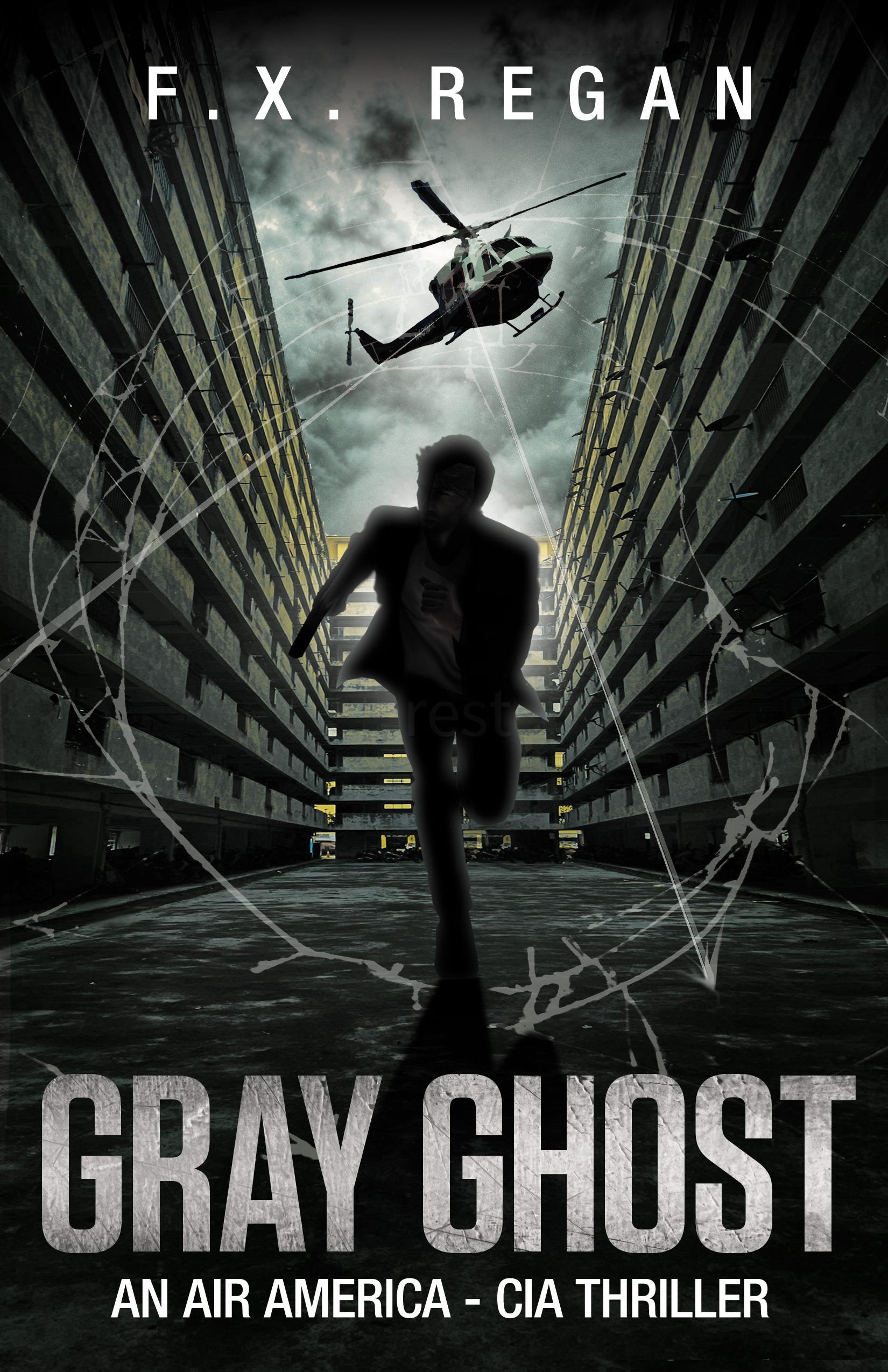
I mentioned last week I’m deep in the third edits of GRAY GHOST - An Air America - CIA Thriller. Unlike anything else I’ve ever done, GRAY GHOST takes you back to the “non-war” in 1968 Laos when former priest, and current CIA case officer Chase Black gets sent to Vientiane to locate and rescue a downed pilot from the CIA’s secret airline, Air America. If all you know about Air America comes from the semi-comedy 1990 movie of the same name, get ready to fix that. Pre-order on Amazon for a September 1st release here.
Also, I just started a top secret project that involves a fictionalized account of a major terrorism case I worked on 30+ years ago. You’ll know it when you see. It’s still topical in the news for reasons you will also see soon, and I’m sure the FBI’s pre-publication review unit will pour over this one closely. Stay tuned for details.
Great read!